

The India-Pakistan match at the T20 World Cup 2026 faces boycott calls amid the force majeure debate. Know what’s behind the controversy, the PCB and ICC positions, and how it could impact cricket diplomacy.
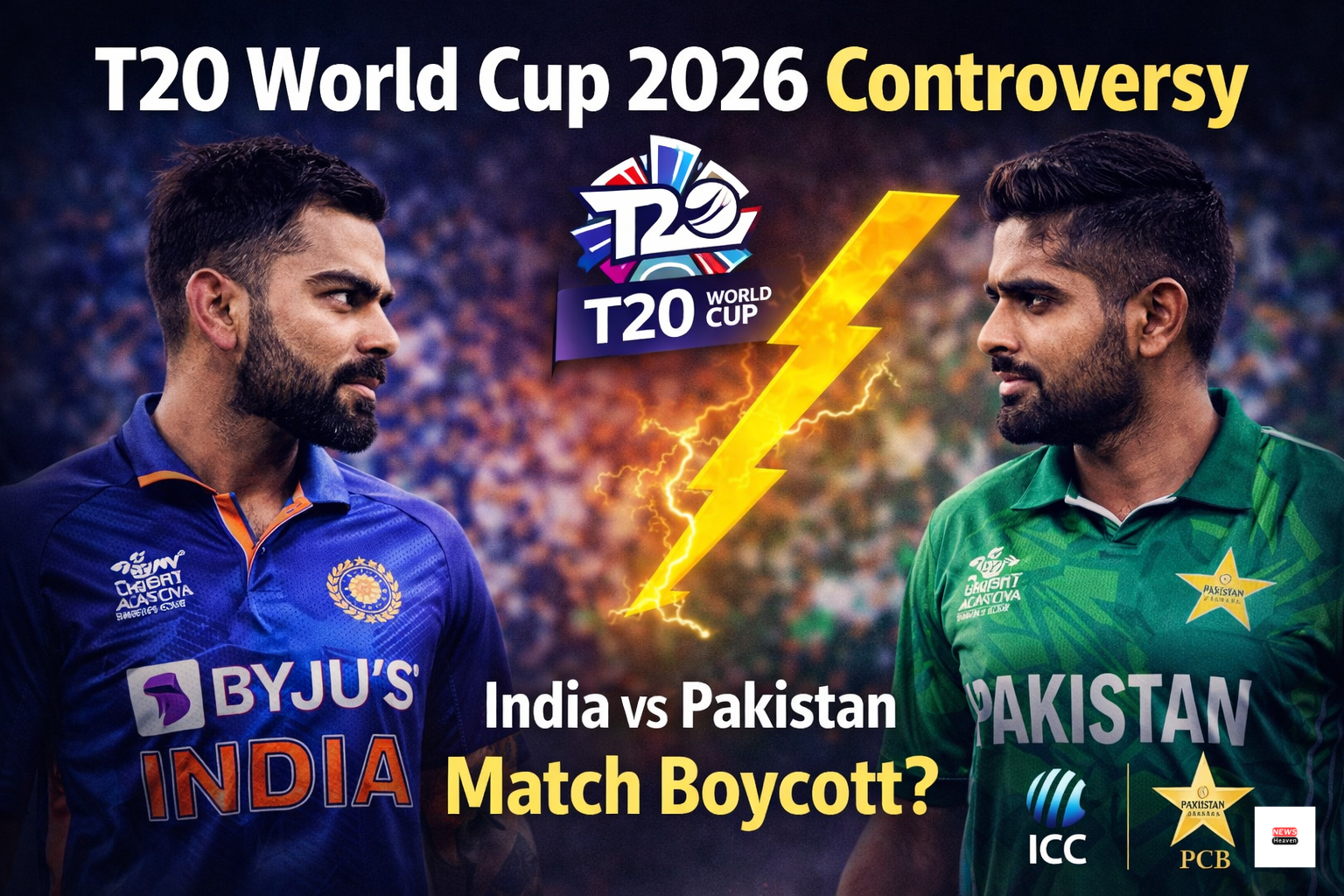

A major controversy has emerged around the high-profile India vs. Pakistan clash scheduled at the T20 World Cup 2026, with calls for boycott and debate over force majeure provisions sparking political and cricketing debate across the subcontinent.
Sports fans around the world wait eagerly for the iconic rivalry, but recent developments have raised questions over whether the match will go ahead as planned. In this article, we break down what’s happening, why the issue has escalated, and how cricket authorities like the ICC and Pakistan Cricket Board (PCB) are responding.
What’s the Controversy About?
The controversy centers on claims that certain groups are urging a boycott of the India-Pakistan match, citing political tensions and invoking force majeure—a contractual clause that allows cancellation of obligations due to unforeseen events.
While sporting events are intended to transcend politics, the protection of national interests and public sentiment has placed the cricket fraternity in a precarious position, with fans and pundits arguing over whether to cancel or proceed.
Force Majeure: What Does It Mean in Sports?
In legal terms, a force majeure clause allows parties to back out of contracts when extraordinary circumstances—like wars, natural disasters, or political prohibitions—make performance impossible or unsafe.
In the context of international cricket, invoking force majeure could mean:
-
Rerouting or rescheduling the match
-
Cancelling the fixture without penalties
-
Impacting contractual rights with broadcasters and sponsors
However, such clauses are rarely used in major ICC events, especially for matches with iconic rivalries like India vs. Pakistan.
PCB’s Stance on the Issue
The Pakistan Cricket Board (PCB) issued statements highlighting that sporting engagement should continue despite political differences, emphasizing cricket as a bridge between nations.
According to PCB officials:
-
Cricket should be treated separately from political disputes
-
Fans deserve the spectacle of the India-Pakistan fixture
-
Defensive language around boycotts should be avoided
PCB’s response makes it clear that they are not in favor of a boycott and prefer open dialogue to preserve the bilateral spirit.
ICC’s Position and Possible Outcomes
The International Cricket Council (ICC)—the global governing body for cricket—has not yet announced any formal changes to the schedule.
Experts believe the ICC will:
-
Review contractual obligations with host nations and broadcasters
-
Assess security and safety protocols
-
Consult member boards before making a final decision
The ICC’s priority remains maintaining the integrity of the tournament while ensuring player safety and fan access.
Politics vs. Sports: A Delicate Balance
The heart of the debate lies in balancing political sensitivities with the spirit of sport. For decades, India vs. Pakistan cricket matches have been among the most-watched sporting contests in the world, bringing high TV ratings, fan engagement, and commercial value.
However, past incidents have shown that political tensions can spill over, creating uncertainty around fixtures, tours, and bilateral series.
Despite the controversy, many analysts believe that global cricket—and sports in general—should aim to rise above diplomatic tensions wherever possible.
Possible Scenarios Ahead
Here are some outcomes that cricket experts are considering:
1. Match Goes Ahead as Scheduled
If both boards and the ICC agree, the game could proceed with reinforced security and diplomatic messaging focused on peace.
2. Reschedule or Neutral Venue
If political tensions remain high, relocating or rescheduling the match could be considered under rare circumstances.
3. Cancellation via Force Majeure
While unlikely in ICC events, this remains a theoretical option if obligations can’t be met.
Impact on Fans and Cricket Diplomacy
Any change to the India-Pakistan fixture would deeply affect fans across both nations and beyond. These matches fuel passion, optimism, and global viewership, and hold symbolic significance far beyond points tables.
Cricket diplomacy has historically been a channel for soft-power engagement, and losing such a fixture would disappoint millions of fans.
Conclusion
As the T20 World Cup 2026 unfolds, all eyes are on the India-Pakistan match amid boycott calls and force majeure discussions. Cricket boards, the ICC, and political stakeholders face a delicate task—balancing national sentiments with the spirit of sport.
For now, no official cancellation has been confirmed, but the debate highlights how intertwined cricket and geopolitics have become in the subcontinent.
News Heaven’s Advice:
Cricket thrives when fans and players focus on the sport’s unifying power—let dialogue prevail over division, and let the game go on.
Also read: LED Lights in Your Bedroom Can Disrupt Sleep and Confuse Your Brain — Here’s What You Should Know