

Sleeping with LED lights on can disrupt your circadian rhythm and confuse your brain. Learn how artificial light affects melatonin and sleep quality and what you can do for better sleep.
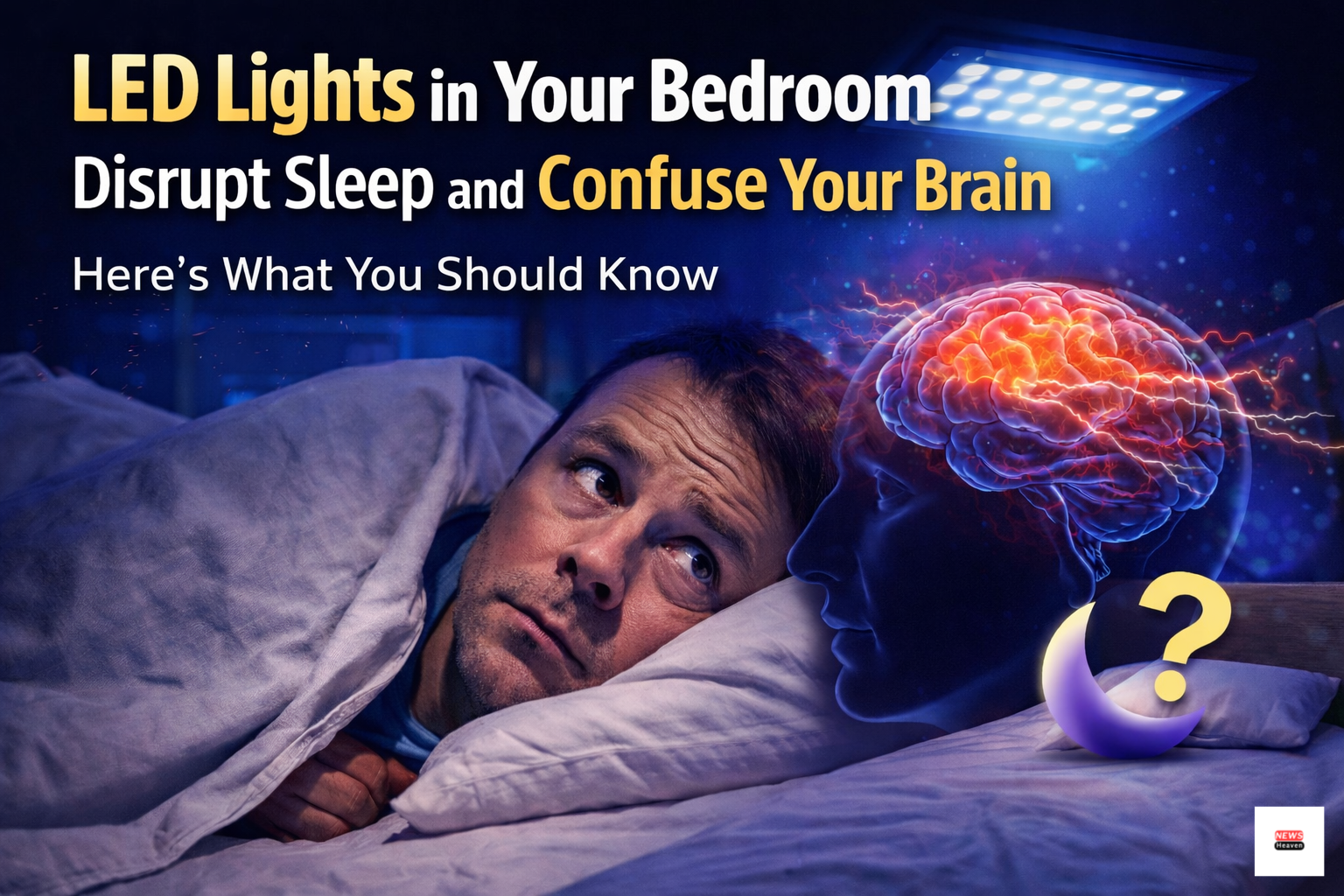

In the modern era, LED and artificial lights have become an essential part of our daily lives. From bedrooms to living rooms, bright lighting is everywhere. But did you know that keeping LED lights on while sleeping can seriously affect your sleep and brain health?
Health experts warn that LED lights—especially those emitting blue or white light—can confuse the brain’s natural biological clock and disturb the sleep cycle. As a result, people may experience poor sleep quality, morning fatigue, increased stress, and difficulty concentrating during the day.
The Science Behind Sleep and the Biological Clock
The human body functions according to a natural 24-hour internal clock known as the circadian rhythm. This rhythm controls sleep, hormone release, body temperature, and alertness.
-
Darkness signals the body that it’s time to sleep
-
Light signals the body to stay awake
When it gets dark, the brain releases melatonin, a hormone that helps us fall asleep and stay asleep. However, exposure to LED or artificial light in the evening sends a false signal to the brain that it’s still daytime, reducing melatonin production and delaying sleep.
How LED Lights Confuse the Brain
1. Reduced Melatonin Production
LED lights, particularly those with a blue light spectrum, suppress melatonin secretion. Since melatonin plays a key role in preparing the body for sleep, reduced levels can cause:
-
Difficulty falling asleep
-
Fragmented or interrupted sleep
-
Reduced deep sleep and recovery
2. Disruption of Circadian Rhythm
When the brain continues to receive light signals at night, the circadian rhythm becomes disturbed. This shifts the natural sleep-wake cycle, making it harder to maintain a consistent sleep schedule.
👉 Result: Irregular sleep patterns and difficulty waking up refreshed in the morning.
LED Lights and Brain Health
Exposure to LED light at night doesn’t just affect sleep—it also impacts brain function:
-
The brain remains in a semi-alert state
-
Restorative sleep phases are reduced
-
Mental recovery during sleep becomes incomplete
Over time, this can lead to daytime tiredness, reduced focus, mood changes, and increased mental stress.
Why Dim or Warm Light Is Better at Night
Not all light affects sleep in the same way. Research suggests that:
-
Warm, amber, or low-intensity lights have minimal impact on melatonin
-
Cool white and blue LED lights suppress melatonin the most
This is why warm lighting is considered more suitable for evening and nighttime use.
5 Practical Tips for Better Sleep
To protect your sleep quality, experts recommend:
-
Turn off bright lights at least one hour before bedtime
-
Use warm or dim lighting in the bedroom
-
Avoid screens like mobile phones, TVs, and laptops before sleep
-
Install blackout curtains to block outside light
-
Use an eye mask if complete darkness isn’t possible
Small lifestyle changes like these can significantly improve sleep quality over time.
In Short: LED Lights and Sleep
LED lights are energy-efficient and convenient, but excessive exposure at night can negatively affect both sleep and brain health. Long-term sleep disruption may also impact physical and mental well-being if left unaddressed.
News Heaven’s Advice:
For deep and restful sleep, avoid bright LED or blue light at night and keep your bedroom dark or softly lit with warm lighting.
Also Read:
👉 Amla: The Ayurvedic Superfruit Loaded with Medicinal Properties and Health Benefits