

Learn how to identify fake turmeric with these 6 simple tests. From water tests to iodine and acid checks, ensure your turmeric is pure with these easy methods.
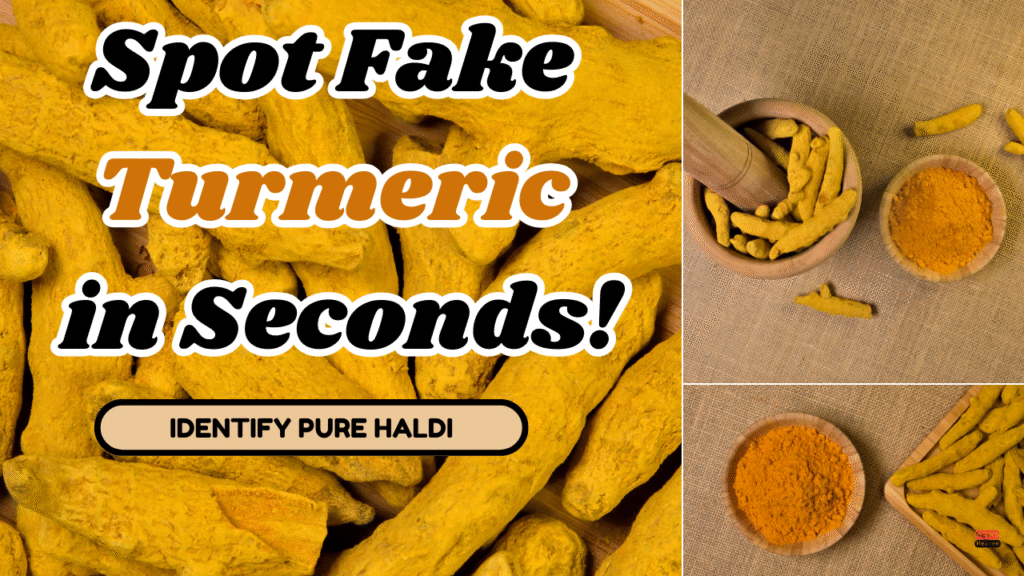

Is your turmeric real or fake? 6 Simple Tests You Can Do at Home to Find Pure Haldi
Turmeric (haldi) is a vital Indian spice for cooking and health. But store-bought turmeric is often mixed with toxic compounds, which can be harmful. For the safety and health of everyone in the family, it’s important to know how to tell the difference between real turmeric and fake turmeric.
Why it Matters to Have Pure Turmeric
Turmeric that is pure boosts the immune system, helps wounds heal, and is good for your health in general.
Fake or fake turmeric may have chemicals or colorants that are bad for your health and act like “yellow poison.”
6 Easy Ways to Tell if Turmeric Is Fake
1. Water Test: Real turmeric sinks, fake turmeric floats.
One of the quickest and best ways to tell if turmeric is fake is to do the water test. This is how to accomplish it:
- Step 1: Get a glass of warm water.
- Step 2: Put in a teaspoon of turmeric powder.
- Step 3: Mix it up and let it sit for a few minutes.
What will happen: The pure turmeric will sink to the bottom of the glass, leaving the water clear and light yellow. But fake turmeric could float on top and make the water dark yellow because it has fake colors or other things in it.
2. Hand Rub Test: Pure Turmeric Leaves a Yellow Stain
You can tell if turmeric has been cut with something else by doing a simple hand rub test:
- Step 1: Take a small amount of turmeric and massage it between your hands.
- Step 2: Look at the outcome.
What will happen: Pure turmeric will leave a yellow mark on your hands that is hard to get off. Fake turmeric could not leave a mark at all, or it might feel gritty when you touch it.
3. Iodine Test: Starch Changes Color to Blue-Black
You can use the iodine test to see if your turmeric has been mixed with starch:
- Step 1: Put a little bit of turmeric powder on a paper towel.
- Step 2: Put a drop of iodine solution in it.
What will happen: The iodine will turn blue-black if the turmeric has starch in it. This means that starch has been added, which is a typical ingredient in fake turmeric.
4. Acid Test: Bubbles Show That It’s Chalk Powder
This test tells you if your turmeric has chalk powder or other fillers in it:
- Step 1: Combine a little bit of turmeric with a few drops of vinegar or lemon juice.
- Step 2: Watch what happens.
What will happen: If bubbles appear, it means that chalk powder is in the turmeric, which is a traditional way to cut it.
5. The soap test shows that fake turmeric changes color.
The soap test can help find some things that are not pure in turmeric:
- Step 1: Mix turmeric with water and a little soap.
- Step 2: Mix and look for a change in color.
What will happen: If the color gets darker after you add soap, it could mean that it has been tampered with. Pure turmeric usually won’t react this way.
6. Lemon Juice Test: Fake Turmeric Bubbles
The lemon juice test is another easy way to see if anything has been tampered with:
- Step 1: Put a few drops of lemon juice into a mixture of turmeric and water.
- Step 2: Look for any fizzing.
What will happen: If the turmeric fizzes, it probably means that chalk powder or other chemicals have been added to it.
How adding things to food affects health
- Eating fake turmeric raises the risk of digestive disorders and allergic responses.
- The chemicals and colorants in imitation turmeric might also cause health problems in the long run.
Last Tips for Keeping Your Kitchen Safe
- Always get turmeric from brands and stores you can trust.
- Use these home tests to check your kitchen spices often, especially if you buy them in bulk or at local markets.
- Stay away from turmeric that looks suspicious or isn’t very good to keep your family healthy.
Knowing and using these fast ways to tell turmeric apart will help you cook safely and healthily while keeping the real taste and health benefits of turmeric in your dishes every day.
Also read: 7 Amazing Health Benefits of Eating Rice You Should Know