

Bollywood actor Rajpal Yadav is serving a jail sentence for bouncing a ₹9 crore Cheque . Can he secure release by paying the amount? Learn the full legal details, court rules, and how India’s cheque bounce law works under Section 138.
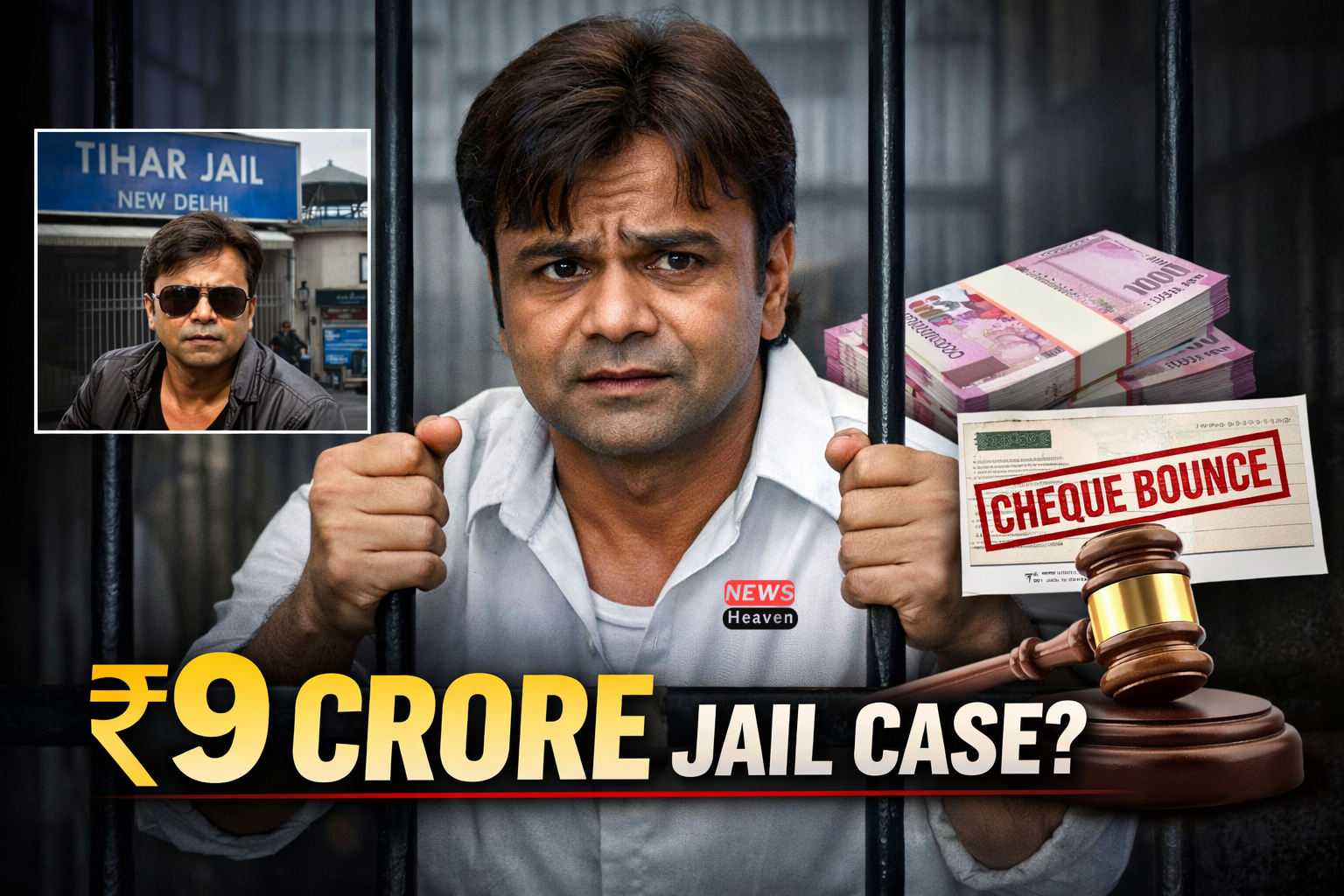

Rajpal Yadav Cheque Bounce Case: Can Payment of ₹9 Crore Lead to His Release?
Bollywood actor and comedian Rajpal Yadav has found himself in serious legal trouble after being sentenced to jail in a long-running ₹9 crore cheque bounce case. The development has sparked widespread curiosity — if he deposits the entire ₹9 crore now, can he immediately walk out of jail?
Here’s a complete breakdown of the case and the legal rules involved.
📍 How Did the Case Begin?
The controversy dates back to around 2010, when Rajpal Yadav reportedly took a loan of approximately ₹5 crore from a Delhi-based company to finance his film “Ata Pata Laapata.” Unfortunately, the film failed commercially, and the actor struggled to repay the borrowed amount.
To settle the dues, Rajpal Yadav issued several cheques to the lender. However, these cheques were returned unpaid due to insufficient funds, leading to a legal case under Section 138 of the Negotiable Instruments Act, 1881.
Over time, due to interest, penalties, and legal costs, the total outstanding amount reportedly increased to nearly ₹9 crore.
⚖️ Court Proceedings and Jail Sentence
After years of litigation, the court took strict action. When Rajpal Yadav failed to comply with court directions and did not clear the pending dues within the stipulated time, the court ordered his custody.
The Delhi High Court reportedly refused to grant further relief, leading to the actor serving a six-month jail sentence in connection with the cheque bounce case.
💰 Can Rajpal Yadav Be Released by Paying ₹9 Crore?
This is the most discussed question.
The legal position is clear:
✅ Settlement Is Possible—But With Court Approval
If Rajpal Yadav deposits the full ₹9 crore and reaches a mutual settlement with the complainant, he can approach the court for relief. The court has the authority to:
-
Consider suspension or modification of the sentence
-
Allow compounding (settlement) of the offense.
-
Grant bail based on compliance
However, this does not happen automatically.
❌ Payment Alone Does Not Cancel the Sentence
Even if the amount is paid, the court must formally approve the settlement. Until then, the existing jail sentence remains valid. A judicial order is required to terminate or reduce the punishment.
📜 What Does Indian Law Say About Cheque Bounce?
Cheque bounce cases in India are governed by Section 138 of the Negotiable Instruments Act, 1881.
Here’s how the law works:
-
A cheque is issued for repayment.
-
The cheque is returned unpaid due to insufficient funds or related reasons.
-
The lender must send a legal notice within 30 days of cheque dishonor.
-
The issuer gets 15 days to clear the payment after receiving notice.
-
If payment is not made, the lender can file a criminal complaint.
🔹 Punishment Under Section 138:
-
Up to 2 years imprisonment, or
-
Fine up to double the cheque amount, or
-
Both imprisonment and fine
🏛️ Does Serving Jail Time Erase the Debt?
No.
Even if an accused serves a jail sentence, the financial liability does not automatically disappear. The complainant can still pursue recovery through legal channels unless a formal settlement is recorded.
In Rajpal Yadav’s case, the legal outcome now depends on:
-
Whether he arranges the full ₹9 crore
-
Whether both parties agree to settle
-
Whether the court approves the settlement
📊 Why This Case Is Important
Cheque bounce cases are extremely common in India, especially in business and film financing matters. Rajpal Yadav’s case highlights:
-
The seriousness of financial compliance
-
The strict enforcement of Section 138
-
The importance of court-approved settlements
It also sends a message that even celebrities are not exempt from financial accountability under Indian law.
Also Read: Bharat Taxi Drivers Earn More Than Ola-Uber? Full Earnings Calculation Explained