

India’s 2025 monsoon rainfall patterns are changing. Learn how it’s impacting agriculture, crop yields, and farmers’ livelihoods this year.
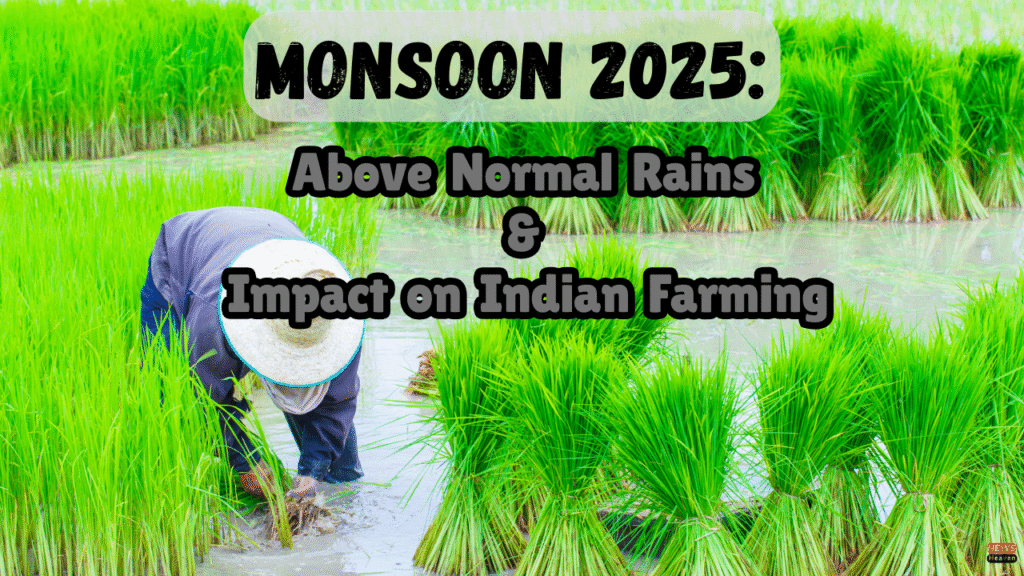

India’s agriculture heavily depends on the annual monsoon rains. In 2025, the monsoon season has shown unusual patterns, with some states receiving heavy rainfall and others facing below-average showers. According to the Indian Meteorological Department (IMD), these variations could have a direct impact on crop yields, food prices, and the livelihoods of millions of farmers.
Monsoon Progress in 2025
The 2025 southwest monsoon arrived on time in early June but quickly turned unpredictable. While central and northeastern states like Assam, West Bengal, and Chhattisgarh recorded excess rainfall, western states such as Rajasthan and Gujarat experienced long dry spells.
The IMD reported that overall, India has received 4% above normal rainfall so far, but the uneven distribution remains a major concern.
Impact on Kharif Crops
Kharif crops, including rice, maize, and pulses, rely heavily on monsoon rains.
- Positive Impact: Regions with adequate rainfall are seeing healthy crop growth. Paddy fields in eastern states are expected to give above-average yields.
- Negative Impact: In low-rainfall regions, delayed sowing and water shortages could reduce output, particularly for pulses and oilseeds.


Effect on Farmers and Rural Economy
Agriculture employs over 40% of India’s workforce, so any change in rainfall patterns has a wide impact.
- Farmers in drought-hit areas are spending more on irrigation.
- Crop insurance claims are expected to rise.
- Rural spending may decline if yields fall, affecting local economies.
Government Response
The Indian government has announced several measures to support farmers, including:
- The affected districts are expanding their irrigation coverage.
- The government is also providing farmers with subsidized seeds for re-sowing.
- We are raising the Minimum Support Prices (MSPs) for specific crops.
State governments are also working closely with the IMD to provide timely weather alerts to farmers via SMS and mobile apps.
Climate Change Concerns
Experts say that climate change is increasing the unpredictability of monsoon rains. Sudden heavy downpours followed by dry spells are becoming more frequent, making farming riskier. Long-term solutions such as better water management, crop diversification, and investment in drought-resistant seeds are being discussed.
Conclusion
The 2025 monsoon season is a reminder that while overall rainfall might be close to normal, its uneven distribution can have serious consequences for agriculture and the economy. Policymakers, scientists, and farmers must work together to adapt to these changing patterns and protect India’s food security.
Also read: Retail Inflation in India Drops to 1.55% in July—Lowest Since 2017
India & China Likely to Restart Direct Flights Next Month as Ties Improve