

Learn the 8 early warning signs of kidney damage—from foamy urine to fatigue. Stay alert and protect your kidney health with expert insights.

🩺 Introduction: Why It’s Important to Keep Your Kidneys Healthy
Your kidneys are important organs that quietly filter out pollutants, keep blood pressure stable, and keep fluids in balance. However, kidney injury sometimes happens without any obvious signs until a lot of damage has been done. If you know the early warning signals, you can act before it’s too late.
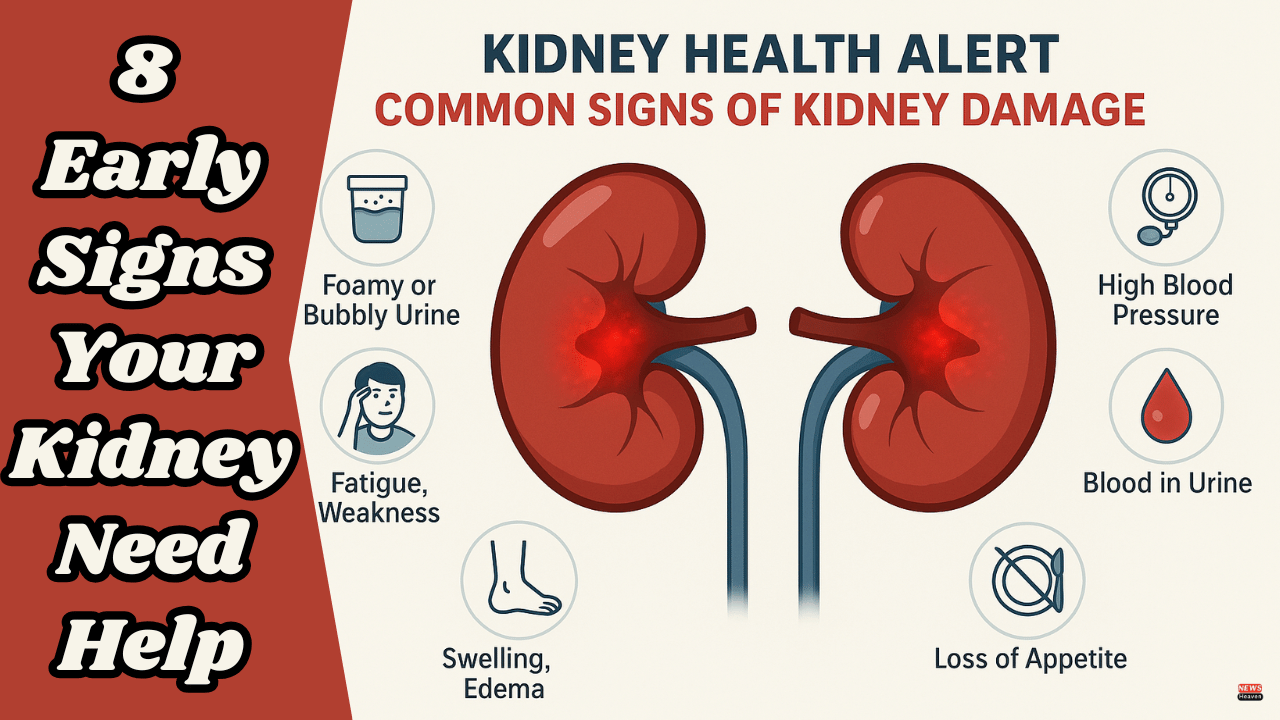
Recent medical reports and health specialists have pointed out these 8 typical indicators of kidney disease that everyone should know about.
1. Urine that is foamy or bubbly
If you see foam or bubbles in your urine that don’t go away, you may have proteinuria, which means you’re losing too much protein. This could be an early warning that your kidneys aren’t working right, since healthy kidneys normally keep protein from seeping into urine.
2. Swelling in the hands, feet, or ankles
When the kidneys don’t work properly to get rid of extra fluids, they build up in the body and cause swelling (edema). The swelling usually happens in the legs, ankles, or around the eyes, and it can get worse over time.
3. Tiredness and weakness.
Damage to your kidneys may prevent them from producing enough red blood cells or proteins, which can leave you feeling tired and weak. If you often feel worn out even after resting, your kidneys may not be working right.
4. Less urine output
A significant reduction in urine output or the presence of dark-colored urine may indicate deteriorating renal filtration. In more serious circumstances, this could mean that the kidneys are hurt badly or that chronic kidney disease (CKD) is getting worse.
5. High Blood Pressure ❤️
Your blood pressure and kidneys are very closely linked. Damage to your kidneys can cause them to retain too much fluid and sodium, which can result in high blood pressure. This makes your kidneys work even worse, which is a deadly cycle.
6. Blood in the urine (hematuria)
If your urine appears crimson or brown, that’s a strong sign that something is wrong. It could mean that there is bleeding in the urinary system or injury to the glomeruli. If this happens, always see a doctor.
7. Loss of Appetite and nausea.
If your kidneys aren’t working properly, waste can build up in your blood, which can make you feel sick, lose your appetite, or even taste metal in your mouth. These signs and symptoms commonly show up in the later stages of renal disease.
8. Problems with concentration and dizziness
Toxins in the blood can disrupt how the brain works, making it hard to focus, making you dizzy, or causing memory problems. This often happens with additional symptoms like tiredness and edema.
Tips for prevention and care
To keep your kidneys safe:
- Drink enough water, but don’t eat too much salt.
- Check your blood sugar and blood pressure often.
- Cut down on booze and processed foods.
- If you have diabetes, high blood pressure, or a family history of renal disease, you should get kidney function tests every year.
✅ Conclusion: Pay attention to what your body is telling you
Damage to the kidneys can be quiet but devastating. It could save your life to pay attention to small indications like changes in urine, edema, or tiredness. If you have any of these symptoms, you should always see a nephrologist or other healthcare expert.
At News Heaven, we want to help people take charge of their health and wellness by making them more aware of it.