The 56th GST Council meeting in New Delhi is set to bring GST 2.0 reforms—cutting slabs to 5% and 18%, while imposing a 40% luxury tax. Learn what may get cheaper, what may get costlier, and how states are reacting.
GST 2.0: A Big Change in India’s Tax System
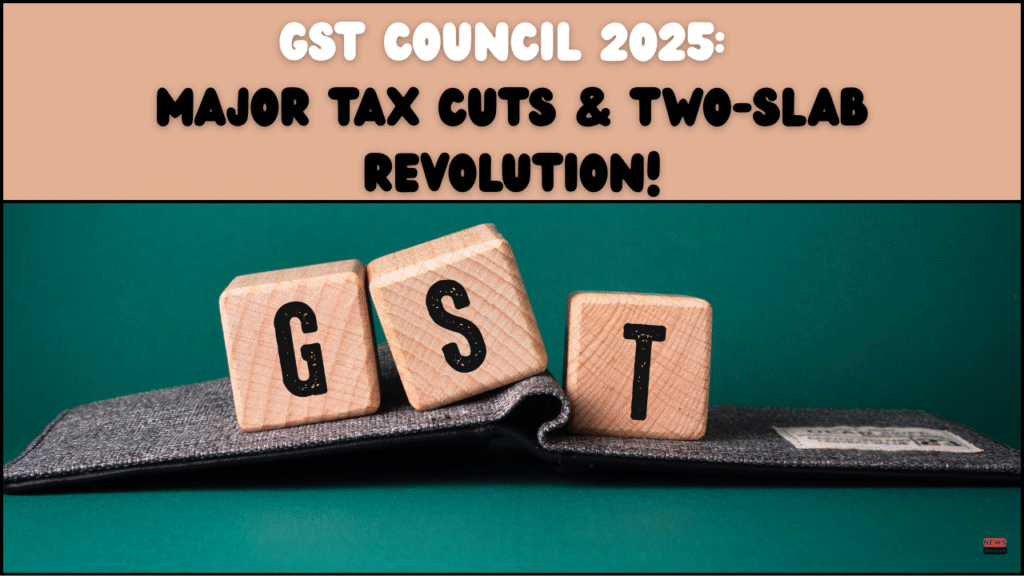
The 56th meeting of the Goods and Services Tax (GST) Council, led by Finance Minister Nirmala Sitharaman, started on September 3, 2025, in New Delhi. People think that the meeting was the start of GST 2.0, a major change that will make India’s indirect tax system easier to understand, encourage spending, and make it easier for businesses to follow the rules.
1. The two-slab GST structure (5% & 18%) is one of the main changes on the agenda.
- The Council is thinking of cutting the present four-tier system (5%, 12%, 18%, 28%) down to only two levels: 5% and 18%.
- 99% of the items in the 12% category, such as ghee, stationery, medications, and packaged food, may move to the 5% category.
- Electronics, air conditioners, freezers, and washing machines are some of the 28% of products that might drop to 18%.
This rationalization would simplify compliance with the rules, reduce lawsuits, and enhance convenience for consumers.
2. A new 40% tax on luxury goods and sins
Luxury and demerit items could be charged a 40% GST slab and a cess if it applies. Things in the list are:
- High-end automobiles and SUVs that cost more than ₹50 lakh
- Cigarettes, pan masala, and alcohol
- Luxury consumer goods and high-end personal care items
This is meant to make up for lost income from rate reduction while also stopping people from buying dangerous goods.
3. Relief for Consumers & Industry
The change is likely to lower prices in a number of areas:
- Shampoo, toothpaste, talcum powder, cookies, and packaged meals may move to lower GST slabs in the FMCG sector.
- Cars: Entry-level cars and hybrid cars may only be taxed at 18% instead of 28%, which makes them cheaper.
- Insurance: To get more people to buy life and health insurance, premiums may not have to be paid or may be decreased.
- Electronics: TVs, computers, and other home items might grow cheaper, which would increase demand around the holidays.
States that are against it are worried
- Some states that are against the reforms, including Karnataka, Kerala, Tamil Nadu, West Bengal, and Jharkhand, have raised concerns.
- They say that every year they will lose ₹1.5–2 lakh crore in revenue.
- Jharkhand expects a shortage of ₹2,000 crore.
- Before obtaining final consent, states want the Centre to set out a way to pay for things.
States fear that if they fail to receive payment, they will have to reduce their welfare spending and development initiatives.
Market & Economic Impact
- Positive Market Sentiment: Before the meeting, stock indices like Sensex and Nifty went up, showing that investors were hopeful.
- Boost to Consumption: Lower GST on gadgets and other necessities could make people spend more during the holidays.
- Global Signals: Making GST easier to understand makes it easier for businesses to work in India and shows foreign investors that the country’s policies are stable.
Final Thoughts: A Balancing Act of Reform
The 2025 meeting of the GST Council has the potential to significantly impact India’s indirect taxes. The administration wants to make it easier to follow the rules and boost growth by switching to a two-slab system and adding a 40% luxury tax.
GST 2.0 will only work if the center handles state revenue issues efficiently. Prices for everyday items like electronics may go down, while luxury goods may have to pay more in taxes.
As the festive season approaches, India waits to see if these changes will bring both relief and stable revenue. This is a real balancing act for policymakers.
Also read: