
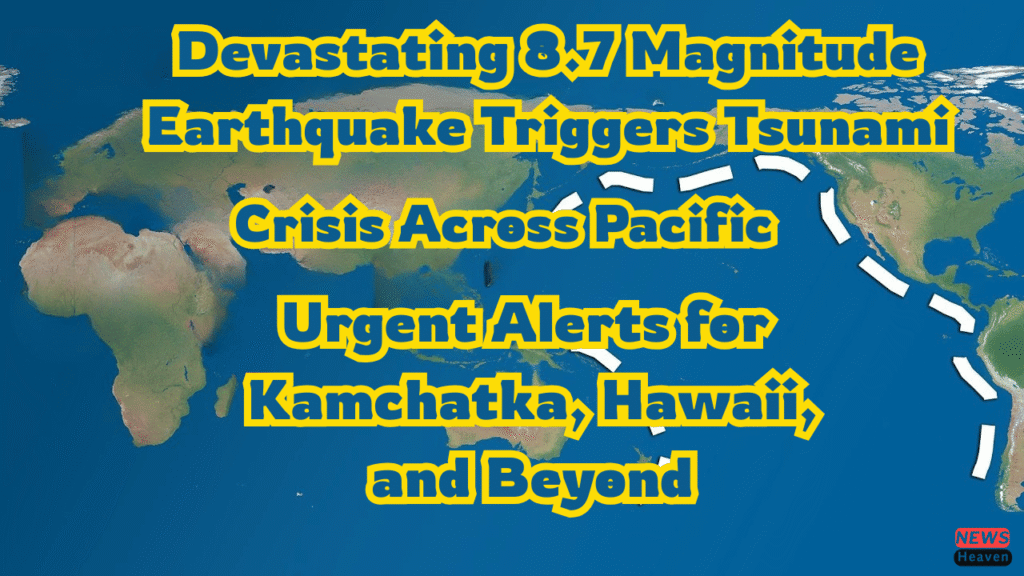
A massive 8.7 magnitude earthquake struck off Russia’s Kamchatka Peninsula, triggering tsunami alerts across the Pacific. Countries like Japan, Hawaii, and the U.S. West Coast are on high alert. Learn more about the earthquake’s impact and safety measures.
A tsunami hits the Kamchatka coast of Russia. After an 8.7 magnitude earthquake, the Pacific Rim is on high alert.
On July 30, 2025, a strong earthquake with a magnitude of 8.7 hit off the Kamchatka Peninsula in Russia. This episode caused a big wave to hit coastal areas and set off tsunami warnings around the Pacific Rim. The earthquake caused waves of up to 4 meters in certain places, leading to emergency evacuations and stronger warnings for countries near the Pacific Ocean, such as Japan, Hawaii, Alaska, and the U.S. West Coast.
What Happened?
The earthquake impacted the Pacific Ocean off the Kamchatka Peninsula at a shallow depth of 19.3 kilometers. The strong earthquake shook the whole area, causing tsunami waves to rise to very high levels. The earthquake happened at about 6:00 AM local time, and the Pacific Tsunami Warning Center sent out warnings to numerous countries almost immediately after.
Tsunami Damage in Kamchatka, Russia
The Kamchatka Peninsula in Russia is known for having many earthquakes, but this one was one of the strongest in the last few years. The tsunami slammed the coastal town of Severo-Kurilsk, flooding the port and damaging many buildings and roads. Local officials acted quickly, moving thousands of people to higher ground and declaring an emergency situation for the area.
There were reports of major flooding and damage to buildings and roads, with waves reaching heights of up to 4 meters. The Russian government is currently figuring out how severe the damage is and sending help to the places that need it.
Warnings of tsunamis have been sent out to Pacific countries.
The earthquake has had consequences all around the Pacific Ocean. Japan, Hawaii, Alaska, and the U.S. West Coast are just a few of the countries in the Pacific Rim that are on high alert for possible tsunami waves. This is a summary of the tsunami’s impact and people’s reactions in some affected areas:
- Japan is used to dangers from earthquakes and tsunamis, so the authorities swiftly told more than 900,000 people near its eastern coast to leave. The warning was mostly for Hokkaido and other parts of northern Japan, where the first waves were minor, but there was still a chance of bigger ones. As authorities warned of additional earthquakes and further waves, tsunami alarms went out in coastal areas.
- Hawaii: Hawaii’s emergency services acted immediately by sounding tsunami sirens and telling people to leave the coast. Local officials told people to go to higher ground or migrate inland. The islands were supposed to get waves at 7:15 PM local time. Officials continue to closely monitor the situation as the tsunami continues to pose a significant threat. They are advising individuals to remain vigilant for further updates.
Warnings were sent out for areas of Alaska and the U.S. West Coast, including California, Oregon, and Washington. People living along the coast from the Aleutian Islands to California were cautioned that there could be big waves and dangerous conditions. Officials told people to leave coastal areas and go to higher ground since waves could come as late as 4:00 AM local time.
The Kamchatka Earthquake’s Effects Around the World
This earthquake is a clear reminder of how vulnerable the Pacific “Ring of Fire” is to earthquakes. This area is recognized for having a lot of tectonic activity. The Pacific Ring of Fire is a place where many tectonic plates come together. As a result, this area is likely to experience earthquakes, volcanoes, and tsunamis. In this example, the earthquake and tsunami that followed have had a devastating effect on Russia and adjacent countries, and they have also raised concerns around the world about the safety of coastal locations in the Pacific Ocean.
Suggestions and safety measures
- Follow Evacuation Orders: If you reside in a coastal area that could be hit by a tsunami, you must leave right away if you get an evacuation order. Tsunamis usually come in waves, and the threat can last for hours after the first wave.
- Stay up to date: Please stay informed by following the news and heeding official warnings. When it is safe to go back to the impacted areas, the authorities will send out an “all-clear” signal.
- Head for Higher Ground: If you live in a coastal area that is at risk and hear tsunami sirens or get a tsunami warning, go to higher ground right away. The waves can quickly flood coastal locations that are low-lying.
- Do Not Return Until Safe: Be careful even after the tsunami has passed. There may be strong aftershocks and secondary waves that make things even more dangerous.
Final Thoughts
The 8.7-magnitude earthquake near Kamchatka has shown how dangerous earthquakes may be in the Pacific Rim and how important it is to be ready for them. With the issuance of tsunami warnings for Japan, Hawaii, Alaska, and the U.S. West Coast, the entire world is on high alert. In the next few hours, it’s vital for people to follow government instructions, stay informed, and make sure they are safe.
As things change, we will keep you updated on the effects of the tsunami and the work that is still going on in affected areas.
Also read:
Shocking Truth: Sunjay Kapur’s ₹30,000 Crore Estate—Karisma Kapoor Excluded
Roshanara Club in Delhi: A Historic Legacy Transformed into a Modern Public Destination




Pingback: When Do Tsunamis Occur After an Earthquake? Understanding Tsunami Triggers and Affected Regions