

Discover how people survived icy winters long before blankets or quilts were invented. From fire and animal hides to warm stones and clever architecture—explore ancient techniques that kept early humans warm in extreme cold.

❄️ Introduction: When it was difficult to stay warm
Before blankets, heaters, and comforters made life easier, people had to deal with the bitter cold all the time. The News Heaven article “Winter Survival Before Blankets: How Our Ancestors Beat the Cold Without Quilts” looks at this fascinating issue.
Our predecessors lived in tough conditions, yet they came up with smart ways to stay warm and battle the cold. Let’s look at the five main ways that people stayed alive and thrived in a world without wool or blankets.
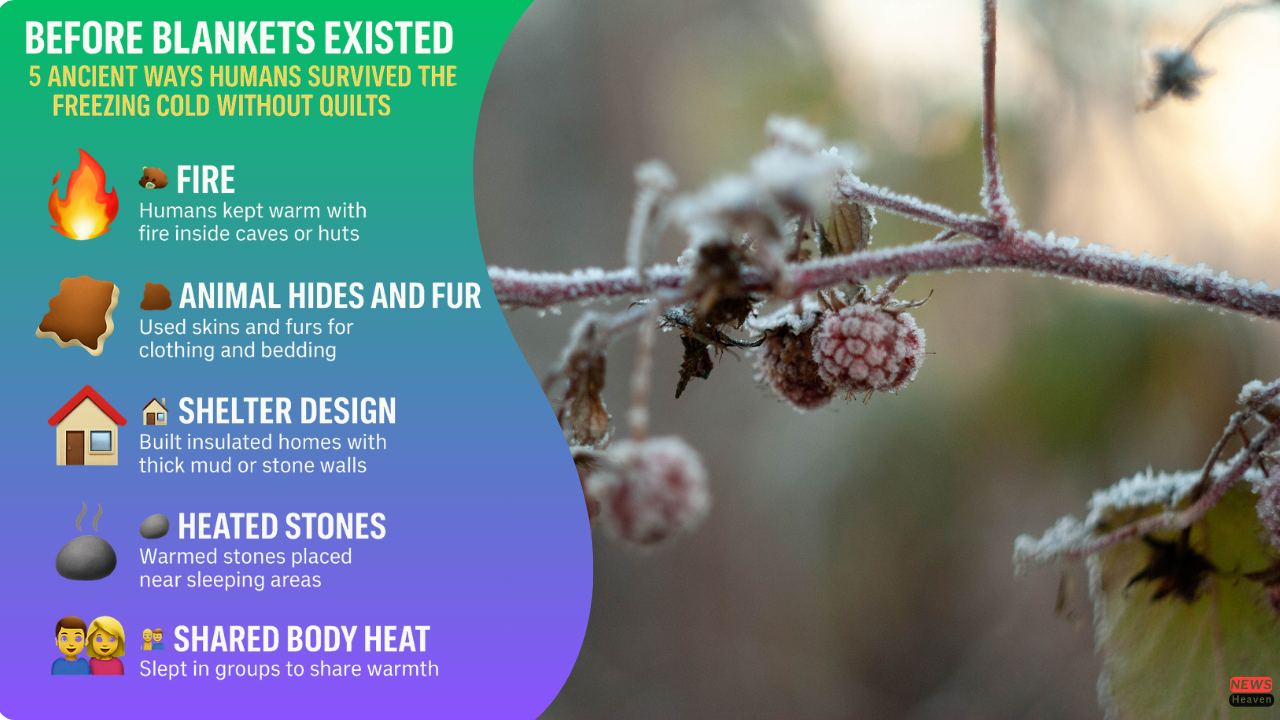
🔥1. Fire—The First Heater for People
Fire was one of the first and most important things that people discovered that revolutionized how they lived.
Early humans used fire not just for cooking but also as a source of warmth, especially in winter.
They made fires inside caves or small homes and put stones around them to keep the heat in. The blazing embers kept the temperature warm all night, keeping them safe from frostbite and wild predators.
Campfires and hearths are still symbols of warmth and protection today, a reminder of how people used to survive.
🐻 2. Animal hides and fur are like blankets from nature.
Before people learned how to weave fabric or make cotton, they used animal skins and furs to keep warm.
These thick hides acted like natural blankets, keeping the heat in and the cold winds out.
Hunters took great care to keep the skins of bears, deer, and wolves in good condition so they could wear them as coats or use them as beds.
As time went on, these furs formed the first “clothing systems,” showing that people are always able to adapt to the weather.
🏠 3. Designing a Shelter: Making it Warm from the Ground Up
Architecture was crucial for survival in ancient times.
People built homes that kept the heat in by using natural caves, mud cottages, and stone huts.
The thick walls of mud or stone kept the temperature inside consistent by absorbing the sun’s heat during the day and letting it out at night.
In places like the Himalayas, dwellings were built partly underground to protect them from cold winds. This method was an early example of energy-efficient design.
🪨4. Heated stones and earth floors were the first radiators.
Before electric heaters, early communities came up with a clever way to heat stones.
People would put big rocks near fire pits and then move them closer to where they slept before bed.
Like modern thermal systems, these stones steadily let out heat all night long.
Also, a lot of homes had dirt floors covered in straw, which kept feet warm and damp.
🧑🤝🧑5. Shared Body Heat—Strength in Being Together
When technology wasn’t very effective, people relied on their strongest resource: each other.
Families sometimes slept in clusters, sharing body heat under animal hides.
People slept together in groups to be warm and to develop their social ties and mental comfort during the coldest winters.
Even now, things like bonfires and sleeping together in chilly places are reminders of this old wisdom.
🌍 Lessons from the Past
These simple but clever ways show how clever early humans were. They didn’t depend on luxury; they depended on being creative, paying attention, and changing.
In a world enamored with contemporary heating, recalling these classic survival tips shows us how far we’ve gone and how strong we’ve always been.
🔚 Conclusion:
Fire, furs, stones, and being together kept people alive throughout harsh winters before blankets and quilts were invented.
These natural techniques of staying alive show that people don’t always require technology to be creative and determined.
So the next time you snuggle up under a warm blanket, remember that it all started with a spark, a stone, and a fire shared by everyone.