Relationships often fail when equality and mutual respect are missing. Discover the biggest reasons couples break up and how respect and balance can save a relationship.
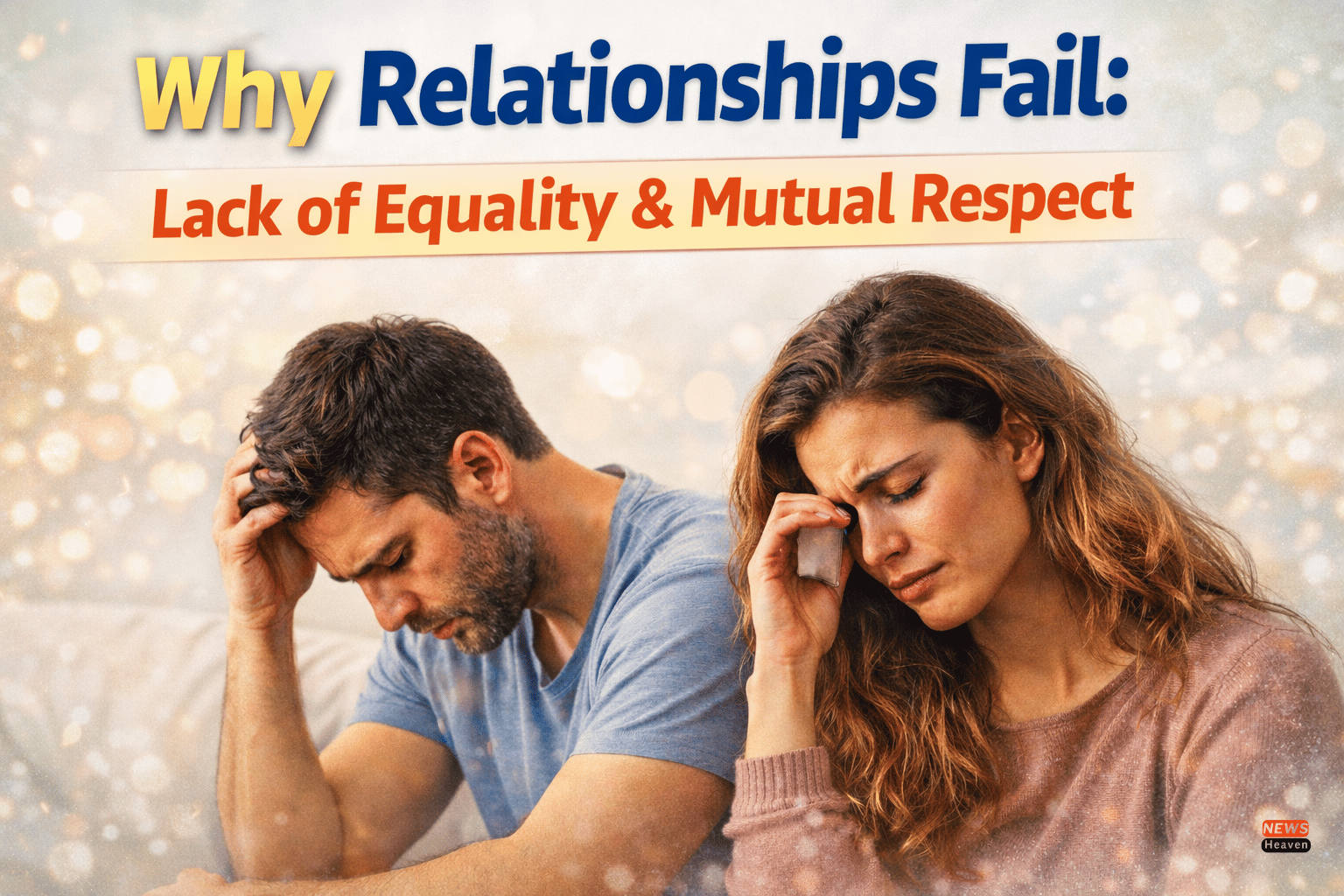
Why Relationships Fail Without Equality and Mutual Respect: Key Reasons Couples Break Apart
In today’s fast-moving world, relationships are becoming more complicated than ever. Many couples start their journey with love, trust, and excitement, but over time, misunderstandings, ego clashes, and emotional distance can weaken even the strongest bonds.
Experts say that one of the biggest reasons relationships fail is the absence of equality and mutual respect. Love alone is not enough to keep a relationship healthy. Without fairness, emotional balance, and respect for each other’s individuality, even the most passionate relationship can slowly fall apart.
In this article, we explain why relationships break when equality and respect are missing and how couples can build a stronger bond through understanding and shared responsibility.
💡 Why Equality and Mutual Respect Matter in a Relationship
A healthy relationship is built on partnership, not power. When both partners feel valued, heard, and treated fairly, the relationship grows stronger with time.
Mutual respect means:
-
Listening without judging
-
Accepting differences
-
Supporting each other emotionally
-
Avoiding insults, control, or domination
-
Giving importance to each other’s opinions
Equality means:
-
Sharing responsibilities
-
Making decisions together
-
Maintaining emotional balance
-
Treating each other as equal partners
When these two key pillars are missing, the relationship often becomes toxic and emotionally draining.
⚠️ Major Reasons Relationships Fail Without Equality and Respect
1. One Partner Starts Controlling the Other
Control is one of the most damaging relationship habits. When one partner begins to dominate decisions, restrict freedom, or constantly monitor the other’s life, it creates emotional suffocation.
Examples of controlling behavior include:
-
Checking phone messages
-
Stopping the partner from meeting friends
-
Controlling finances
-
Deciding what the other should wear or do
Over time, this destroys trust and makes the relationship feel like a prison rather than a partnership.
2. Lack of Emotional Support and Appreciation
Every relationship needs emotional validation. If one partner constantly feels ignored, unsupported, or unappreciated, emotional distance begins to grow.
When appreciation is missing, couples may feel:
-
“I am not important in this relationship.”
-
“My efforts are never noticed.”
-
“I feel alone even while being in a relationship.”
This emotional loneliness can eventually lead to resentment and breakup.
3. Disrespectful Communication and Hurtful Words
Arguments are normal, but disrespect is not.
When couples start using insulting language, sarcasm, humiliation, or personal attacks, the relationship begins to break from the inside.
Disrespectful communication may include:
-
Shouting
-
Mocking feelings
-
Calling names
-
Comparing with others
-
Bringing up past mistakes repeatedly
Such behavior damages emotional safety, which is essential for love to survive.
4. Unequal Responsibilities Create Frustration
Many relationships fail when one person carries the entire burden of the relationship, such as:
-
Household work
-
Financial responsibilities
-
Parenting
-
Emotional management
If one partner feels they are giving 90% while the other gives only 10%, frustration becomes inevitable.
Equality does not always mean “50-50 in everything,” but it means both partners contribute fairly and respect each other’s efforts.
5. Lack of Trust and Constant Doubt
Trust is built through respect. When respect is missing, trust automatically becomes weak.
Constant suspicion and doubt can lead to:
-
Overthinking
-
Jealousy
-
Emotional fights
-
Toxic behavior
-
Insecurity
A relationship without trust becomes stressful and emotionally exhausting.
6. Ego and Power Struggles
Many couples break up because they treat the relationship like a competition instead of teamwork.
Common signs of ego-driven relationships:
-
Always wanting to win arguments
-
Not apologizing even when wrong
-
Refusing to compromise
-
Making the partner feel “less important”
Love grows through humility and understanding, not through power battles.
7. Ignoring Boundaries and Personal Space
A strong relationship requires closeness but also personal freedom.
When one partner constantly invades personal boundaries, the other may feel emotionally trapped. Healthy boundaries include:
-
Respecting privacy
-
Supporting personal goals
-
Allowing time with friends and family
-
Accepting individual hobbies
Without boundaries, relationships become emotionally unhealthy and overwhelming.
❤️ How to Build Equality and Mutual Respect in a Relationship
Experts suggest that couples can strengthen their bond by focusing on these habits:
✔ Communicate With Calm and Honesty
Instead of blaming, speak about feelings clearly and respectfully.
Example:
❌ “You never care about me!”
✅ “I feel ignored when we don’t spend time together.”
✔ Share Responsibilities
Divide household duties, financial planning, and emotional support in a balanced way.
✔ Appreciate Each Other’s Efforts
Even small words like “thank you” and “I’m proud of you” can create emotional warmth.
✔ Respect Differences
Partners do not need to agree on everything. Respecting opinions and personality differences makes relationships stronger.
✔ Avoid Toxic Behavior
Stop behaviors like manipulation, silent treatment, constant criticism, or emotional blackmail.
🌟 Final Thoughts
A successful relationship is not built only on love, attraction, or romance. It is built on trust, equality, and mutual respect.
When partners treat each other fairly, communicate respectfully, and support each other emotionally, the relationship becomes strong enough to survive stress, misunderstandings, and challenges.
If equality and respect are missing, love slowly fades, and the relationship becomes painful rather than peaceful.
The key to long-lasting love is simple:
Respect your partner like an equal, not like an option.
📌 Disclaimer: This article is for informational purposes only. Relationship concerns may vary. If needed, seek professional counseling or expert advice.
Also read: