
External Affairs Minister S. Jaishankar criticizes Donald Trump’s tariff policy, stressing India’s commitment to its “Neighborhood-First” approach and protection of national interests in global trade.
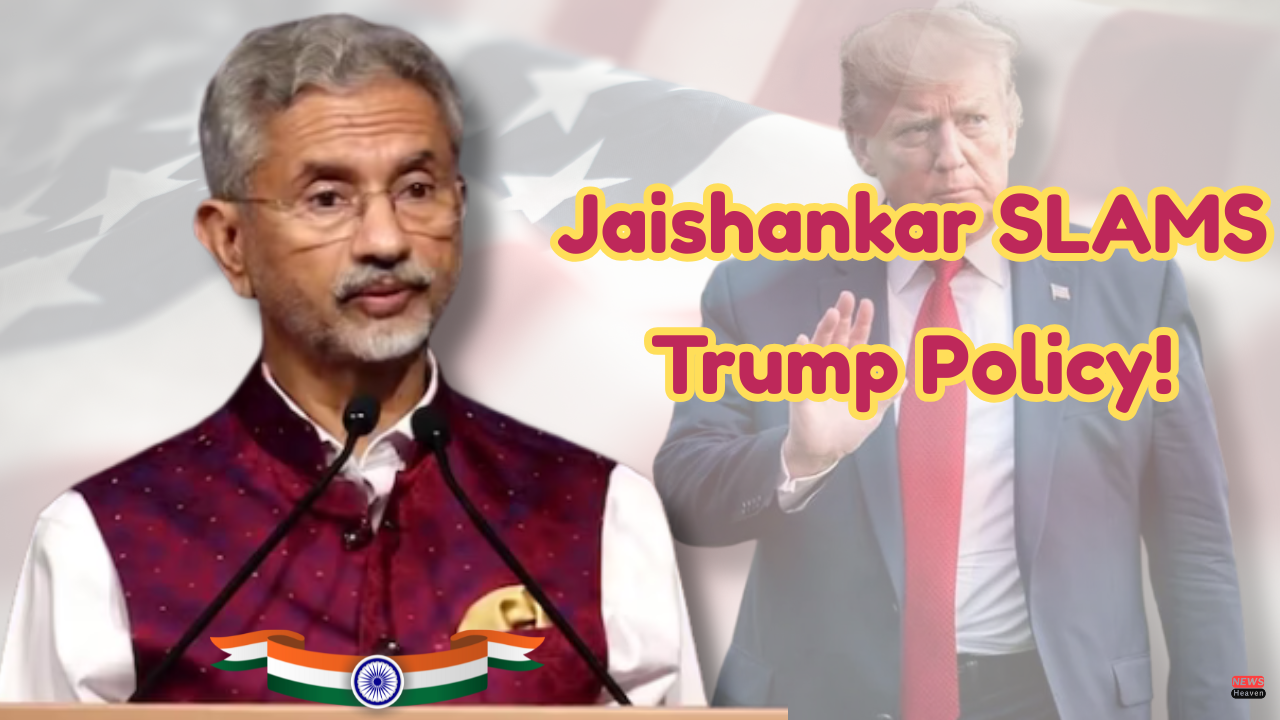
S. Jaishankar says that Donald Trump’s tariffs are detrimental.
India’s External Affairs Minister S. Jaishankar gave a strong speech in which he publicly criticized the tariff policies of former U.S. President Donald Trump, saying they hurt fair commerce around the world. S. Jaishankar spoke at Jawaharlal Nehru University (JNU) at a conference called “India and the World Order: Preparing for 2047.” He claimed that the world is entering a time when “everything is being weaponized,” from supply networks to banking institutions.
S. Jaishankar stated that the emergence of protectionism and trade barriers is altering the dynamics of international relations, prompting countries to reconsider their strategies for safeguarding their interests while maintaining peace.
India’s Trade Position: Honoring Red Lines
S. Jaishankar made it clear that India will not give up preserving its markets, especially in areas like agriculture, dairy, and manufacturing.
He said, “India will engage with the world on its terms,” and he stressed that any trade deal with the US must follow India’s red lines to keep cheap foreign goods from flooding the market and hurting local businesses.
This comment is in line with India’s long-held belief that globalization should be fair and equal, not merely good for big economies.
“Neighborhood First” Policy: India’s Regional Vision
S. Jaishankar passionately talked on the “Neighborhood-First” strategy, which puts regional cooperation and stability first, reaffirming India’s diplomatic stance.
He said that India wants to be the “go-to partner” for its neighbors when they are in trouble, whether that trouble is political, economic, or humanitarian. This plan strengthens India’s leadership in South Asia and demonstrates the nation’s commitment to peace and regional growth.
He also said that India’s foreign policy is changing with the world, but it is still founded on the idea of strategic autonomy, which means being able to make judgments based on national interest instead of global pressure.
The Path to 2047 and Global Instability
S. Jaishankar said that the current world order is full of “everyday instability and competition,” and that countries need to learn how to react rapidly. He pointed out that trade wars and sanctions are examples of geopolitical problems that have made economic tactics as powerful as military ones.
He said that India must keep building up its diplomatic, economic, and defensive capabilities if it wants to become a global powerhouse. He was talking about India’s long-term goal for 2047, which is the 100th anniversary of India’s independence.
The Way India Should Go
S. Jaishankar’s remarks demonstrate the balance of India’s diplomacy. It collaborates with powerful nations like the US while ensuring the preservation of its own interests.
India’s concentration on self-reliance, fair trade, and regional leadership shows that it wants to be a major global player by 2047, as tensions rise throughout the world and trade relations change.
🧩 Final Thoughts
S. Jaishankar’s comments made it clear again that India’s foreign policy is based on common sense, respect for itself, and a desire for stability in the area. His words make it apparent that India is willing to work with other countries, but not if it means giving up its independence or economic security.



Been playing on 4777cxgame for ages now, and I gotta say, they keep things fresh. New games popping up all the time, and the payouts are decent. Give it a whirl at 4777cxgame.