
Discover the groundbreaking AUN bacteria-based cancer therapy developed by Japanese scientists. This innovative treatment targets tumors without relying on the immune system, offering hope to immunocompromised patients. Learn how it works and its potential to revolutionize cancer treatment.
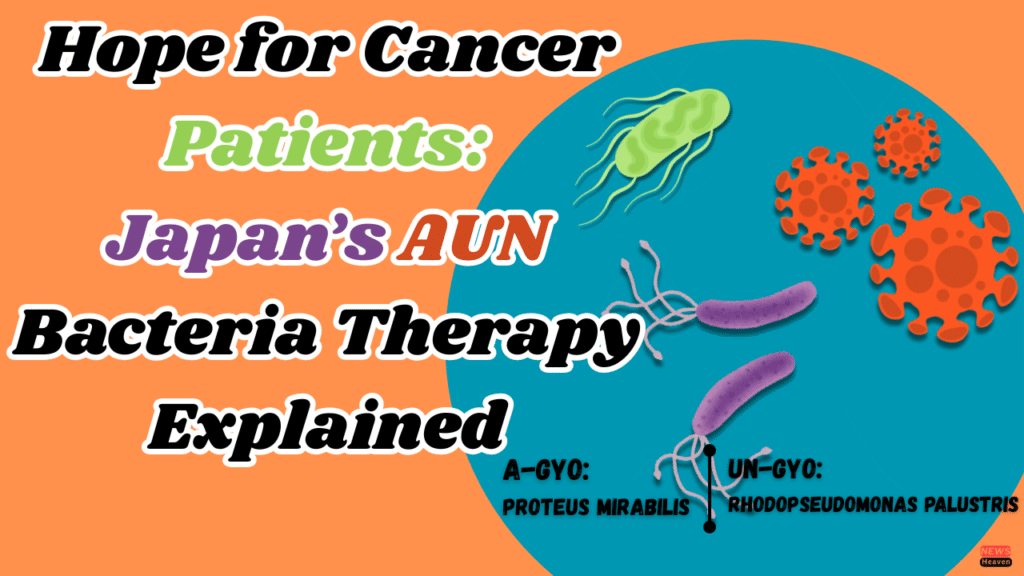
Japanese scientists have made a huge advance by creating a cancer treatment that uses bacteria to attack tumors without needing help from the immune system. AUN is a new type of medication that looks like a good option for patients who can’t use traditional immune-based medicines. This article goes into detail about this groundbreaking finding and how it could change the way cancer is treated.
What is AUN therapy?
AUN (A-gyo and UN-gyo) therapy is a new way to treat cancer that uses a certain mix of bacteria to directly attack and kill tumors. AUN is a good choice for people with weak immune systems because it doesn’t rely on immune cells like other cancer treatments do.
The treatment uses two kinds of bacteria:
- A-gyo: A kind of Proteus mirabilis that is known for its capacity to attack blood arteries and tumor cells.
- UN-gyo, a type of Rhodopseudomonas palustris, aids in controlling A-gyo activity to prevent excessive infections.
How does AUN therapy work?
The bacteria are given in a 3:97 (A-gyo:UN-gyo) ratio. When the tumor location is reached, this ratio changes to about 99:1, with A-gyo outnumbering UN-gyo. This change starts a process that goes after the tumor directly, breaking it down and killing it.
Advantages of AUN Therapy
- No Immune System Dependency: AUN therapy does not depend on the immune system, so it is safe for people with weak immune systems or those who do not respond to immunotherapy.
- Targeted Tumor Destruction: The bacteria only attack the tumor cells, which protects healthy tissue and lowers the risk of side effects.
- Lowered Risk of Cytokine Release Syndrome: AUN lowers the risk of cytokine release syndrome, which is a possible side effect of various immune-based therapies.
Clinical Potential
AUN treatment is still in the preclinical phases, but it has demonstrated encouraging benefits in animal models. Human clinical trials are set to start within the next six years. If it works, it might represent a huge change for cancer patients who don’t respond to current treatments.
What makes this discovery so important?
AUN therapy is a big change in how cancer is treated. It gives patients who can’t benefit from immunotherapy a new approach to get better. This innovation could lead to more tailored, effective treatments with fewer side effects, giving cancer patients around the world new hope.
In conclusion
Japanese scientists have discovered a bacteria-based AUN therapy that could represent the future of cancer treatment. It could change the way we treat cancer because it works outside the immune system and targets tumors to kill them. As clinical trials continue, AUN therapy may be a good option for people who have tried everything else and nothing has worked.
Also read: Does Holding Urine Cause Kidney Stones? What Doctors Want You to Know




Pingback: Effective Dengue Prevention Strategies 2025: Protect Yourself & Your Family from Dengue Fever